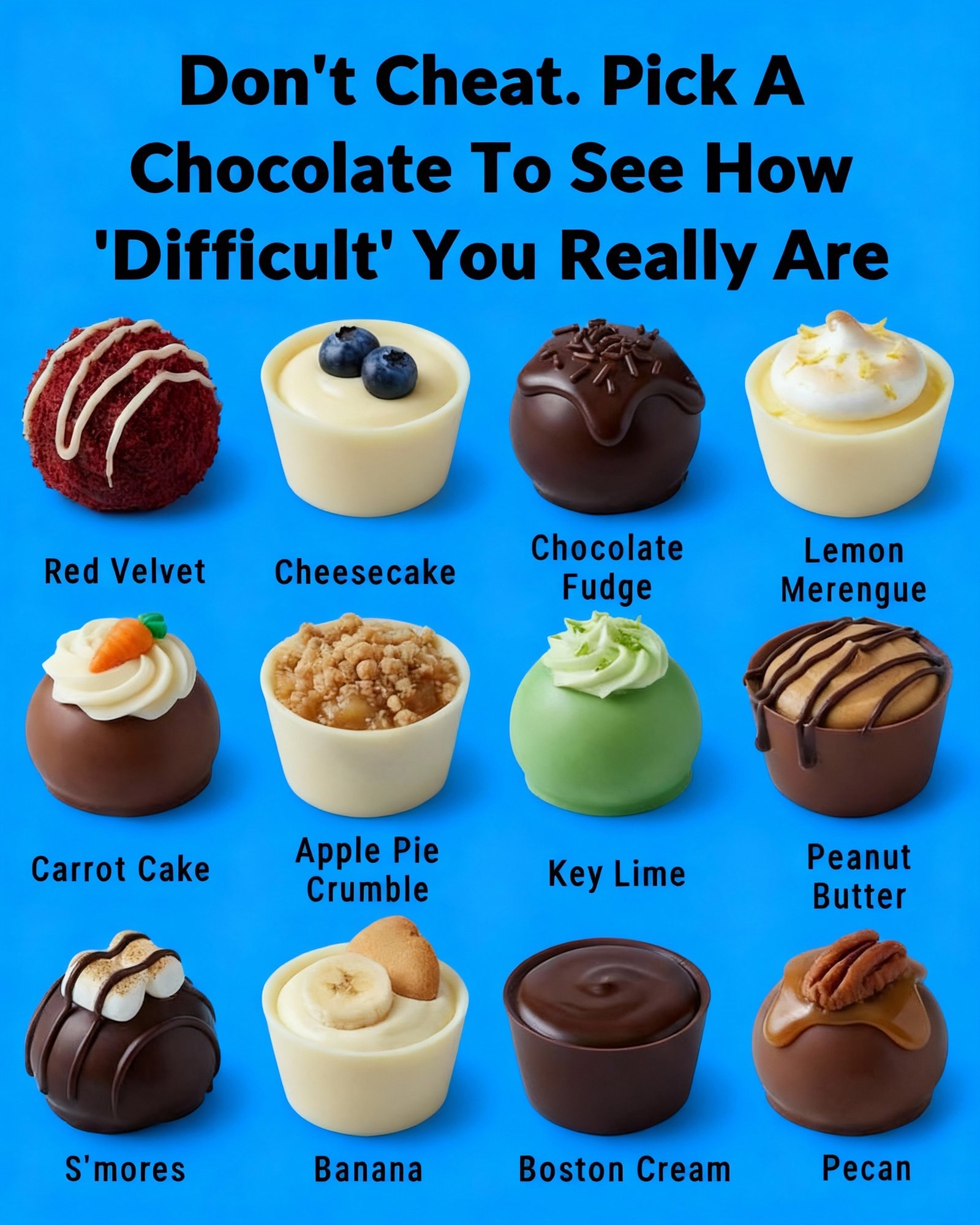
The sign on the café wall was meant to be playful: “Don’t Cheat. Pick a Chocolate to See How ‘Difficult’ You Really Are.” Beneath it sat a neat grid of chocolates, each one carefully labeled—red velvet, cheesecake, chocolate fudge, lemon meringue, and more—like tiny promises waiting to be chosen. I stood there longer than necessary, pretending it was a simple dessert decision. But the truth was, after the kind of week I’d had, it felt heavier than that. Choices always do when you’re tired. Every chocolate seemed to whisper a version of who I might be if I picked it: soft, stubborn, hopeful, guarded.
The sign on the café wall was meant to be playful: “Don’t Cheat. Pick a Chocolate to See How ‘Difficult’ You Really Are.” Beneath it sat a neat grid of chocolates, each one carefully labeled—red velvet, cheesecake, chocolate fudge, lemon meringue, and more—like tiny promises waiting to be chosen. I stood there longer than necessary, pretending it was a simple dessert decision. But the truth was, after the kind of week I’d had, it felt heavier than that. Choices always do when you’re tired. Every chocolate seemed to whisper a version of who I might be if I picked it: soft, stubborn, hopeful, guarded.
When I took the first bite, it reminded me how often we label people the same way we label desserts. Too much. Too intense. Too guarded. Too emotional. We call people “difficult” when they have layers we don’t want to take the time to understand. But every chocolate on that board had a reason for being the way it was. The tart ones balanced sweetness. The rich ones were meant to be taken slowly. The simple ones carried comfort. None of them were wrong. None of them were difficult. They were just honest about what they were made of.