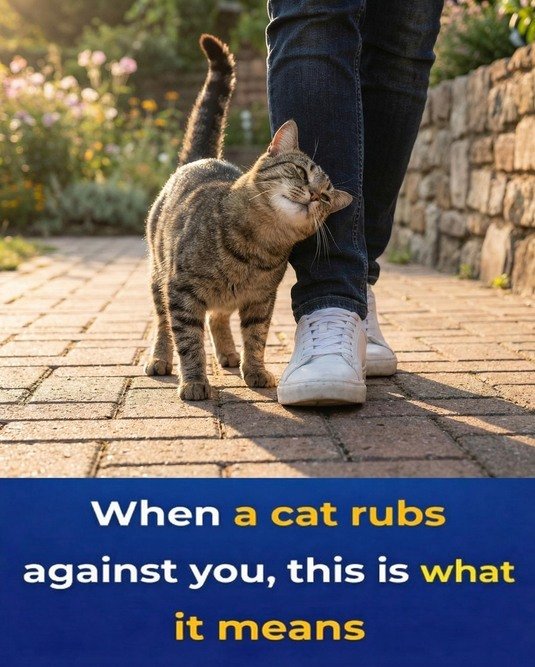
When you arrive home and your cat greets you by weaving around your legs or gently pressing their head against your hand, it often feels like a warm and familiar ritual. Many cat owners experience this behavior daily and recognize it as a sign of affection. However, this simple action carries deeper meaning rooted in feline communication and instinct. Cats experience the world largely through scent, and their behavior reflects that. What appears to be a casual rub is actually a meaningful interaction that helps your cat feel secure, connected, and understood in their environment.
Cats rub against people as a way of communicating trust and familiarity. This behavior, sometimes referred to as bunting, involves scent glands located on a cat’s cheeks, forehead, sides, and tail. When your cat rubs against you, they are transferring their scent onto you. In the feline world, scent is a powerful marker of safety and belonging. By sharing their scent, your cat is signaling that you are part of their trusted space. This action is not about ownership in a human sense, but about creating a shared environment where your presence feels reassuring and predictable.
Rubbing is also one of the most common ways cats greet those they care about. Unlike humans, cats do not rely on verbal greetings or gestures. Instead, they express recognition and warmth through physical contact. A cat that approaches you with a relaxed body, upright tail, and gentle movements is showing comfort and happiness. This behavior can also help cats regulate their emotions. The act of rubbing releases calming chemicals in their brain, which can reduce stress and create a sense of well-being. For this reason, cats may rub against you more frequently during quiet, content moments or when they are seeking reassurance.