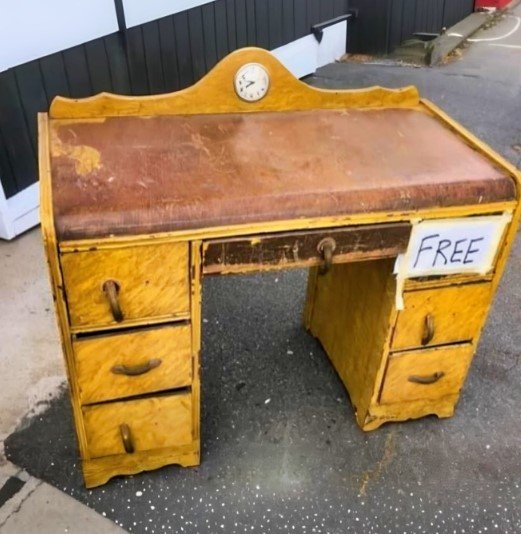
The dressing table had been left at the side of the road with little thought or sentiment attached to it. Its surface was scratched, its shape dulled by thick, uneven yellow paint, and a simple sign reading “Free” suggested it had reached the end of its usefulness. People walked past without slowing down, making quick judgments based on what they could see. To most, it was just another piece of unwanted furniture, discarded and forgotten. But one passerby paused—not because it looked valuable, but because it looked unfinished.
When it was brought home, there was nothing immediately impressive about it. The drawers stuck, parts were damaged, and the paint had been applied carelessly, hiding any hint of detail beneath it. Many would have seen it as a poor investment of time or effort. Instead of focusing on what it wasn’t, its new owner focused on what it could be. He approached the project slowly, removing layers of paint by hand, repairing broken joints, and rebuilding missing sections piece by piece. There was no attempt to rush the process or force a result—only steady, deliberate work guided by curiosity and respect for the object itself.