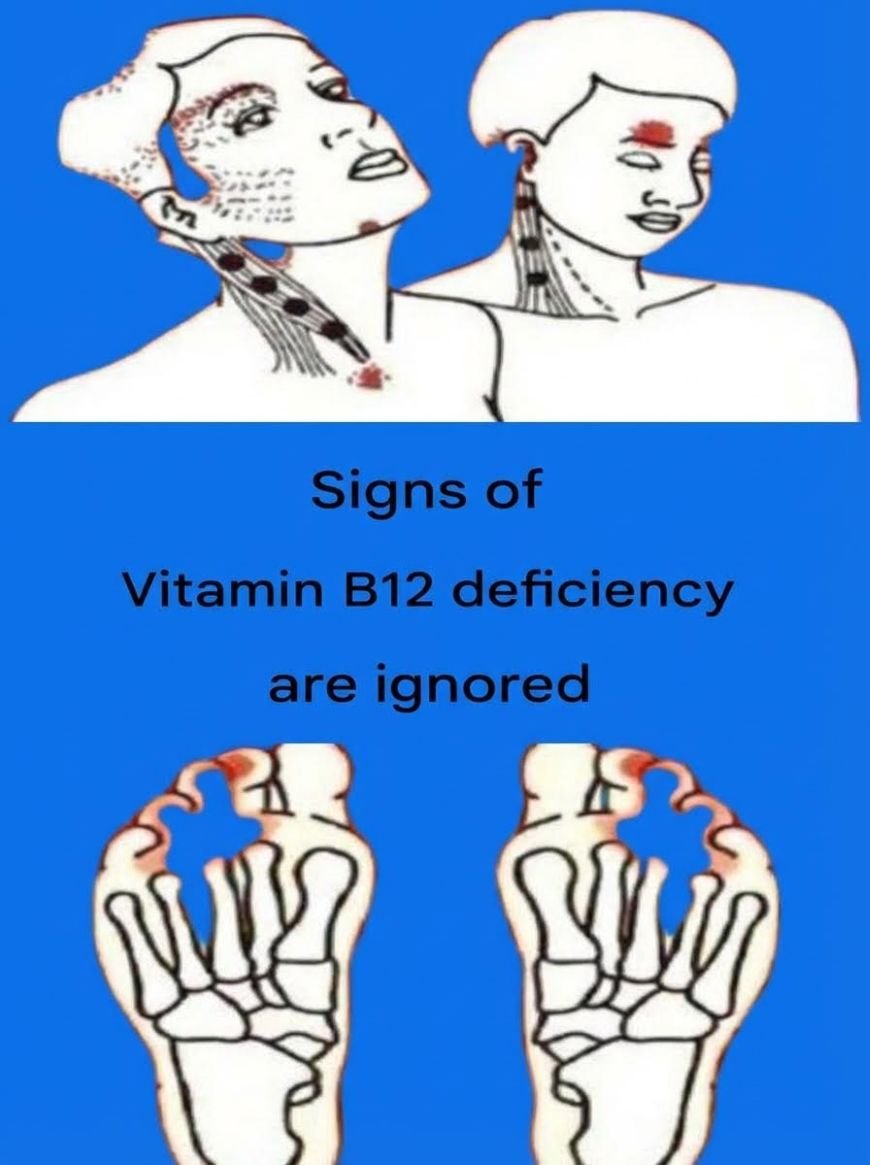
Vitamin B12 is an essential nutrient that plays a quiet but critical role in keeping the body functioning well. It supports nerve health, helps form red blood cells, and contributes to normal energy levels. The challenge is that early signs of low vitamin B12 are often subtle and easy to overlook. The image highlights areas of the body—such as the face, neck, and feet—where changes or discomfort may appear, reminding us that the body often sends signals long before a problem becomes serious. Paying attention to these small clues can make a meaningful difference in long-term well-being.
One of the reasons vitamin B12 deficiency can go unnoticed is that its symptoms often develop gradually. People may experience persistent tiredness, mild weakness, or difficulty concentrating and assume it is caused by stress or a busy lifestyle. Others may notice tingling sensations, numbness in the hands or feet, or a sense of imbalance when walking. These sensations are related to the role vitamin B12 plays in supporting the nervous system. Because these signs can appear slowly and vary from person to person, they are frequently dismissed until they begin to interfere with daily life.